Open library · Free to read · August 2026

tiktok shop listing optimisation checklist.

Your product page converts three audiences at once: customers, affiliates deciding whether to sell you, and the algorithm deciding whether to route traffic to you. This is the setup checklist we run on every one of our 80+ brands.

Checklist · 6 sections 8 min read Updated August 2026

Every pound spent on creators, LIVEs and paid media on TikTok Shop lands on one page: the product listing. It is the least glamorous asset in the channel and the highest-leverage one, because a listing that converts 1% better improves the economics of everything pointing at it. It also does a second job most brands miss: affiliates browsing the Affiliate Centre read your listing like a sales pitch before deciding whether your product deserves their content.

What follows is the working checklist we use when we onboard a brand into shop management. It is complete enough to run on your own. Work through it top to bottom, and be honest about the boxes you cannot tick.

1. product titles that sell and get found

TikTok Shop titles have to do search, persuasion and compliance in around 60 visible characters on mobile. The formula we use:

[Brand] [Hero benefit] [Product type], [Key attribute], [Size or count]

Hydra-Boost Serum 30ml
GlowLab 48-Hour Hydration Serum with Hyaluronic Acid, 30ml

Benefit first, search terms naturally included, no keyword stuffing.

Hero benefit appears in the first 40 characters, before mobile truncation.
Primary search term included naturally (the phrase a buyer would type, not internal product names).
Size, count or shade stated, so the price instantly makes sense.
No ALL CAPS, emoji walls or claim words that trip moderation (see compliance below).
Title reads correctly when a host says it out loud on LIVE. If it is unsayable, it is unusable.

the description field is a script, not an essay

Under the title, the description does its best work as a skimmable spec sheet: three benefit bullets, how to use it in one line, what is in the box, and the sensory details a host or affiliate can lift straight into a video. Write it knowing that nobody reads it top to bottom; buyers scan it for the one answer that unblocks their purchase, and creators mine it for talking points. If a claim is not in the listing, your creators should not be saying it on camera, so the description doubles as the approved claims sheet for your whole community.

2. imagery and video

The first image decides the click; the image stack decides the conversion. TikTok Shop buyers arrive from full-screen video, so static, catalogue-style imagery feels like a downgrade at exactly the wrong moment.
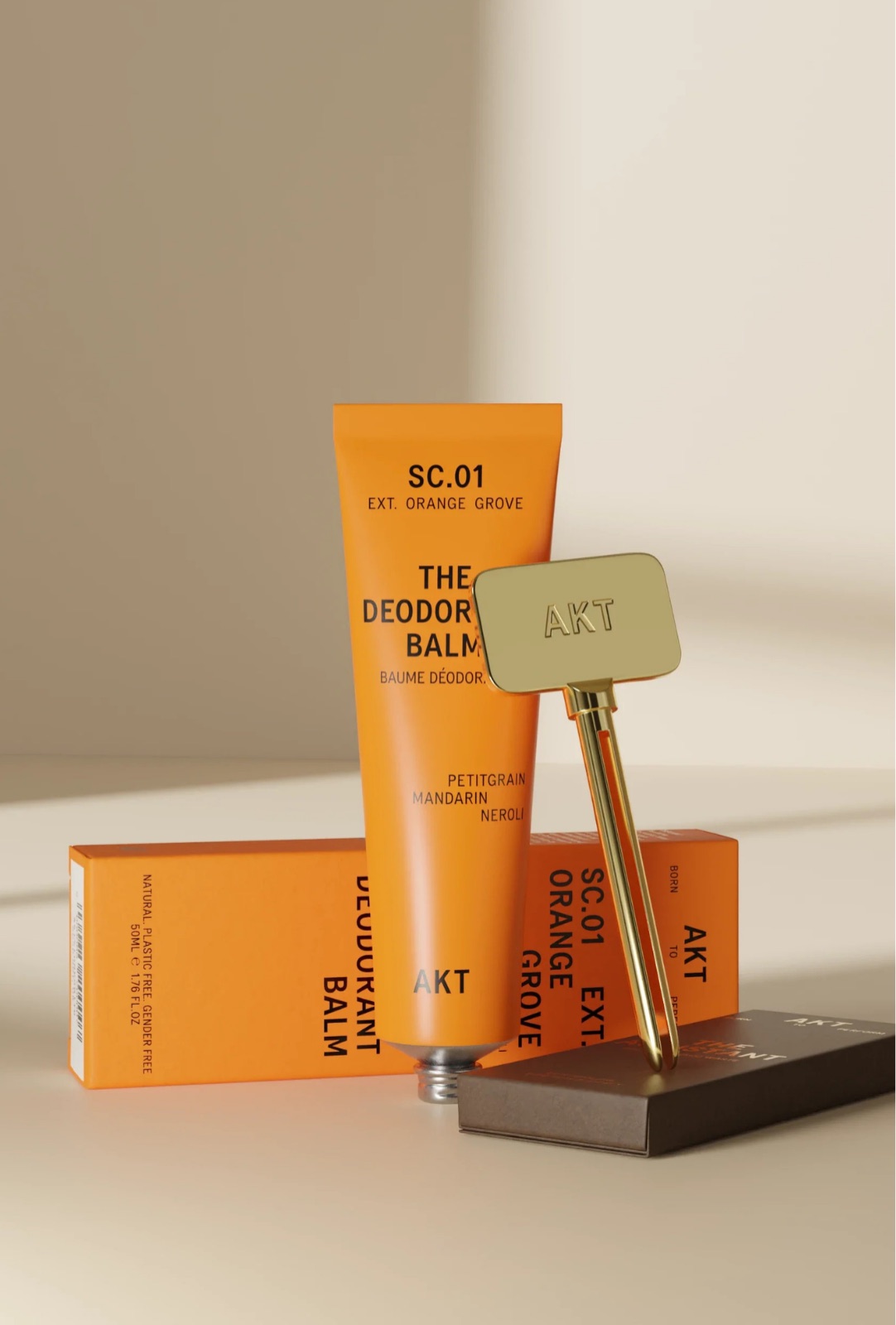
AKT London deodorant balm, boxes and gold applicator
The first-image rule, in practice. AKT London's hero listing shot: product clean and centred, high-contrast background, brand mark legible even at thumbnail size in the feed and in LIVE pins. Everything the first checklist item below asks for, in one frame.
First image: product clean on a bright, high-contrast background, legible at thumbnail size in the feed and in LIVE pins.
Second and third images: product in use, on a real person, showing the hero benefit.
One infographic image: three to four benefit callouts, large type, mobile-legible.
Scale reference: in-hand or next to a familiar object, cutting "smaller than expected" returns.
Product video uploaded: 15 to 30 seconds, vertical, demonstration-led, no dead intro.
Every image still works when cropped square, since placements vary.

3. price anchoring and offers

TikTok Shop is an impulse channel, and impulse needs a visible reason to act now. Anchoring does that honestly when the structure is real:

A genuine anchor price (RRP) set before launch, so discounts show a strikethrough from day one.
A standing shop price 10 to 20% under anchor, leaving headroom for LIVE-only moments.
Deeper offers reserved for LIVEs and campaign windows, so urgency stays credible.
Vouchers stacked deliberately, tested against margin, never left running by default.
Unit economics modelled on retained revenue. Brands typically keep about two thirds of GMV after fees, commission and returns, so price from that number.

4. bundles for aov

Bundling is the fastest AOV lever on the platform, and it is chronically underused. A well-built bundle raises order value, absorbs commission cost and gives hosts and affiliates something to sell beyond a single unit. We wrote a full guide to bundles and AOV on TikTok Shop; the checklist version:

At least one hero bundle: the flagship product plus its natural companion, priced clearly below the sum of parts.
A routine or ritual bundle for beauty and wellness: the full usage sequence in one order.
Bundle titles state the saving ("worth £54") rather than making buyers do maths.
A LIVE-exclusive bundle that hosts can pin as the offer moment.
Bundle margin still funds affiliate commission and a sample programme after the discount.
Do the numbers first

will this listing actually make money?

Titles and imagery lift conversion; margin decides survival. Run your price, commission and bundle structure through our free TikTok Shop P&L calculator, then get the full playbook for the launch system around it.

check my margins get the full playbook

5. reviews and social proof

Reviews compound. Listings with strong early reviews convert better, which earns more traffic, which earns more reviews. The first 50 are the hardest and the most valuable:

Post-purchase review prompts running from day one (TikTok's native flows, plus insert cards where allowed).
Early affiliate orders and seeding recipients encouraged to review honestly. Never incentivise the rating itself.
Every review under four stars answered within 48 hours, publicly and calmly. Buyers read the response more than the review.
Recurring complaints fed back into the listing: if three people say "smaller than expected", your imagery has a job to do.
Review keywords harvested for future titles and hooks. Customers write better copy than brands.

6. compliance basics for beauty and supplements

Nothing kills a winning listing faster than a takedown mid-campaign. Beauty and supplement categories carry the tightest rules, and moderation is automated, inconsistent and unsentimental. The principles that keep listings alive:

No medical or treatment claims: "treats", "cures", "heals", "anti-inflammatory" and named conditions (acne, eczema, anxiety) are takedown bait. Sell the cosmetic benefit: "visibly reduces the look of".
Supplements: no disease-prevention or weight-loss-outcome claims. Structure and function language only ("supports normal energy metabolism"), consistent with permitted claims in your market.
Before-and-after imagery follows platform rules in your region; where restricted, use texture, application and results-over-time content instead.
Ingredient percentages and certifications only where you can evidence them. "Clinically proven" needs the study to exist and be yours to cite.
Every claim in the listing is a claim your affiliates will repeat on camera. If the listing overclaims, your whole creator community inherits the risk.
Category certification documents uploaded and current, so relistings are fast if moderation strikes in error.

Platform policy and category rules move quickly. Last updated August 2026.

~42% of US TikTok Shop GMV is driven by affiliate creator content. Your listing is the sales page every one of those creators links to, and the pitch that convinces them to sell you in the first place. Optimising it lifts every channel at once.

run the checklist quarterly, not once

A listing is not a set-and-forget asset. Prices move, reviews accumulate, moderation rules shift and yesterday's winning title formula gets copied by competitors. We re-run this checklist on managed brands quarterly, and after every major campaign. Premium brands in particular should pressure-test the anchoring and bundle sections against brand positioning, something we explored in how premium brands win on TikTok Shop.

If the checklist surfaced more gaps than you expected, that is normal. Foundations are step one of a five-step engine, and the rest of the system is in our free TikTok Shop playbook (lite).

Next steps

foundations done. now build the engine.

The full Somerce playbook covers what comes after the listing: affiliate seeding, the content testing loop, LIVE cadence and paid timing. Free download, and pair it with the P&L calculator to keep the numbers honest.

get the full playbook open the p&l calculator
FAQ

listing questions, answered.

How many SKUs should I launch with on TikTok Shop?
Three to six hero SKUs beats a full catalogue. TikTok Shop rewards concentration: fewer listings means more reviews per listing, clearer creator briefs and faster learning about what converts. Expand the range once your heroes have proven velocity and review depth.
What is the most common listing mistake you see?
Catalogue titles and catalogue imagery, copied straight from a brand's Shopify store. TikTok Shop buyers arrive mid-scroll from full-screen video, so listings need benefit-first titles, in-use imagery and a product video. The second most common mistake is pricing with no anchor structure, which leaves LIVE hosts nothing credible to offer.
Can I say my skincare product treats acne?
Not on a cosmetic listing. Naming a medical condition turns a cosmetic claim into a medical one, and that risks takedowns for the listing and for every affiliate video tagged to it. Sell the cosmetic benefit instead, such as "visibly clearer-looking skin". If your product genuinely holds a medicinal licence, different rules apply, and you should take proper regulatory advice.
How often should listings be updated?
Review quarterly as a baseline, plus after any major campaign, price change or moderation strike. Feed review language back into titles and imagery continuously. Listings on our managed brands are living assets: what the funnel data says, the listing absorbs.

want your shop run by the record holders.

£100m+ GMV managed across 80+ brands, from listing foundations to the $2.7m world-record LIVE. Tell us about your shop.

Talk to us